BUXTON FESTIVAL FRINGE - YEAR BY YEAR
1980
The Buxton Festival's artistic director, Malcolm Fraser, expresses an interest in seeing a Fringe develop with a parallel programme to that of the main festival, which was set up the previous year in celebration of the restoration and re-opening of the Opera House. The idea of the Fringe is to ensure that visitors have ample choice of entertainment at all times of the day and whatever the weather during the period of the Festival. After an informal meeting on April 13th 1980, a Fringe committee is formed to liaise with participating groups, but not to select or censor performances. Artist Alan Bailey is our first committee chair with Sheila Barker a very active Secretary. The Fringe is to be run as a charity staffed by volunteers.
Local celebrity Tim Brooke-Taylor writes to the Fringe in support of the idea.
The first Fringe takes place in July with 28 music entries, 6 dance entries, 5 drama entries and 17 miscellaneous (everything from exhibitions to flower festivals and clay pigeon shooting at Harpur Hill).
1981
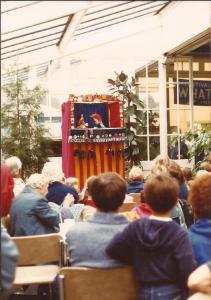
The second Fringe includes a summer ball, Morris Dancing, Punch and Judy, wrestling in the Pavilion Gardens and a Georgian costumed street market.
1982
Although not officially part of the Fringe, the Gandey Bros Circus arrives in town with roaring lions keeping the Fringe secretary awake in her caravan on Burlington Road (see Sheila Barker's interview on the History page)! Highlights of the Fringe include Indian Classical Dance and a two-day folk festival. Barbara Langham becomes Fringe chair.
1983
The Fringe announces that it is double the size of the year before with some 250 performances put on by about sixty groups.
1984
The Fringe programme has a dramatically different cover. Events include The Crescent -200 Years, a talk celebrating the building's history.
1985
Johnny Dagger makes his first appearance on the Fringe with his slides and music in Kingsterndale. He will become a Fringe institution showing up every year until 2005.
1986
Sketch group Edward the Deckchair arrive in Buxton. They become firm favourites coming back every year until 1990. Comedian Vladimir McTavish makes his debut on the Fringe. He is to reappear in a different guise as football manager Bob Doolally in 2001. Arthur Dickinson takes over as Fringe chair.
1987
Another Fringe institution, Jennie Ainsworth, begins her Vera Brittain guided walks, which continue until 2010. Adrian Malbon becomes Fringe chair.
1988
The Fringe amends its constitution.
1989
The Fringe celebrates its 10th anniversary with an exciting programme of over 100 arts events including a Ritual Dance Weekend (an innovation that will carry on until 1997), Swamp Circus and cutting edge comedians Miles and Millner, Alan Parker and the notorious bad taste comedian Jerry Sadowitz (then Gerry Sadowitz), who plastered the town with pink posters warning of his arrival.
The Fringe Information Desk boasts a telephone for the first time.
1990
The Big Fun Marquee Tour makes a splash with its circus skills workshop.
1991
Fringe Sunday is introduced as a way to publicise Fringe events. Peter Low becomes chair of the Fringe Committee, taking over from Adrian Malbon.
1992
The Fringe's fame spreads worldwide. Among the international attractions are the Soweto Paradise Artists from South Africa and Victor Sobchak's Russian Modern Theatre
1993
The programme begins to use a map format. Fringe readings are introduced, read by committee members. They have kept going over the years. The international flavour continues with Grupo Los Angeles playing folk songs of the Andes. Fringe Awards for outstanding performers are introduced.
1994
A Fringe Film Festival is introduced on the theme of 'growing up'. The concept of Fringe Beer, whereby a percentage of the proceeds on a pint go to the Fringe, goes down very well indeed!
1995
The Fringe Programme enjoys another major redesign. A lively Fringe includes Ad Hoc Theatre Co's Not About Heroes on the friendship between Wilfred Owen and Siegfried Sassoon, Soweto Paradise Artists and five-piece band Grupo Los Angeles with Latin dance music.
1996
The REC Theatre arrives on the scene. They will become a firm fixture on the Fringe's drama scene. There is another Film Festival on the theme of Films and Phones. Former Fringe chair Alan Bailey exhibits his paintings, there is music from Cool Camel Blues Band and BLA-BLA-BLA (Buxton Local Artists) and a Buxton Green Peace Children's Fun Day.
1997
A Film Festival takes the theme of Film and Poetry. Characterful Fringe performers include drag act Tina C, Martin Beard as Don Juan and Caribbean singer, guitarist and poet, Antigua Joe.
1998
The Bright Ideas children's art project is introduced. The Buxton Festival Fringe's Schools Art Project for the design of the Fringe programme involves seven schools in and around Buxton. Artist and Fringe member Caroline Chouler goes into the schools to help the children express their ideas artistically. Over 140 children take part and all the finished artwork is displayed in a Buxton Museum exhibition.
This year's Film Festival is on the theme of Alice in Wonderland.
1999
An enticing programme includes Poole's Cavern candlelit tours, quirky singer Tim Woodhouse And His Few Remaining Friends, BumblePuppy with a comedy set in a nuclear bunker and a night of stand-up comedy entitled Best of the Buzz. The Fringe programme suggests that this might be the start of a new comedy club in Buxton - it is!
2000
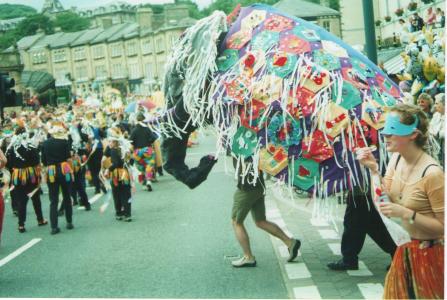
The Fringe comes of age with a packed 21st birthday programme featuring now established comic Ross Noble as part of a comedy festival; Derby Magic Circle offering incredible close-up magic and a remarkable light installation on the Crescent from artist Andrew Robinson. The colourful Millennium project Massive Elephant by Funny Wonders (a huge elephant decorated with Millennium 'wish' ribbons) takes to the streets as part of the Fringe.
2001
An exciting programme features a Jazz Festival parade and a spoof exhibition from one Johan Foops-Grotlier.
2002
OB Design comes up with a bright orange, new-look programme. We are able to afford this thanks to generous sponsorship from the Old Hall Hotel in Buxton.
Nick Butterley becomes the Fringe's first paid employee as full-time Information Desk Manager during the two weeks of the Fringe.
For the first time we publicise our new website, www.buxtonfringe.com, which will become a major marketing tool.2003
The Fringe celebrates a valuable new connection with the University of Derby College, Buxton, who become one of our major sponsors.
2004
The Fringe celebrates its 25th anniversary with Fringe Saturday, a float at the Carnival, a new Friends scheme, a Fringe club at Project X and a special exhibition in Buxton's Old Clubhouse on the history of the Fringe
At November's AGM, Peter Low retires as chair after 15 years of diligent service. John Wilson, vice chair for many years, takes over.
2005
The website receives a facelift offering photographs, a new discussion board and more comprehensive reviews. It is renamed www.buxtonfringe.org.uk to reflect the Fringe's charitable status. Reflecting the quirkiness of the Fringe, Margento improvise painting and music to poetry in Romanian and receive the first 'Fringiest Event' award. Fringe Saturday becomes Fringe Sunday and the Carnival goes eco-friendly with a Shetland pony instead of a float!
2006
A new managed venue, Underground Venues at the Old Hall Hotel is launched. Its founders Three's Company have been inspired by their work with Martin Beard, founder of the Fringe's first managed venue, Venue 21 upstairs at the Old Clubhouse. Fringe Sunday continues to grow with 8 performances this year. The Fringe has a new Carnival float, courtesy of Lomas Distribution. High Peak Borough Council withdraws funding after 20 years but Derbyshire County Council come to the rescue with a one-off grant of £1000, Trevor Osborne of the Crescent Spa Hotel project gives us £2000 and Friends come flocking with 79 Friends having signed up by June.
2007
New to the Fringe committee, French designer Armelle Perrin comes up with a brand new programme design hailed as clearer and more colourful than ever. Carnival float, courtesy of Lomas, continues and Fringe Sunday is best yet with lively acts including the crowd-pulling Belly Dance Flames. High Peak Borough Council returns as a sponsor with a reduced but very welcome three-year package. More than 100 Friends help contribute to Fringe funds. Website increases in importance with new discussion board and Fringe entrants entering online for the first time. The Fringe becomes a member of the British Arts Festivals Association and co-hosts BAFA's annual October conference this year held in Buxton.
2008
Fringe is largest to date with 126 entries. An extensive audience and entrants' survey is carried out revealing that 86 per cent of the audience rate Fringe very good or excellent. Fringe is estimated to bring in more than £300,000 to local economy. 2009 30th anniversary celebrations start early with Fringe30 gala show at Buxton Opera House on November 7 featuring past award-winners including visual arts exhibitors. At the Fringe AGM on November 18 John Wilson stood down as Fringe chair to be succeeded by former vice-chair Stephanie Billen.
2009
The Fringe celebrates its 30th anniversary with a whopping 141 entries, more than ever before. Fringe30 has a real buzz with celebrations including Vers@Tile a multi-media arts project involving schools and community groups, a film festival courtesy of Buxton Film and an outdoor exhibition from Art on the Railings. The Fringe website's archive page is expanded with interviews with past and present Fringe figures carried out by High Peak Radio and broadcast via YouTube. Buxton Community School joins in the fun with special Fringe30 posters and a children's well dressing in our honour. The number of Fringe Friends goes up to 151 with Joint Membership now introduced for the first time. Peter Low, former chair, stands down from the committee. Our second audience and entrants' survey reveals even larger spend associated with the Fringe (over £350,000), younger audiences, higher audience satisfaction and increased ticket sales at the two managed venues, Nice and Underground. Buxton Community School Year 10 students begin making a documentary on A Year in the Life of the Fringe. The Fringe pioneers Schools Link designed to encourage Fringe entrants to perform at schools; this is refined for 2010.
2010
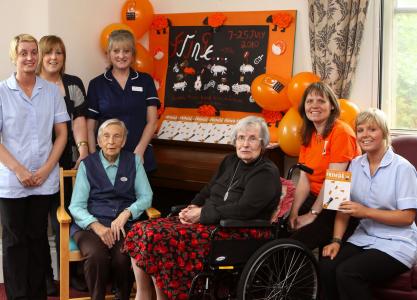
The Fringe gets even bigger with over 150 entries including first ever Buxton Military Tattoo at the University of Derby Buxton's Dome (attracting 800 plus audience). Other firsts included the award-winning Buxton Art Trail and Hendrick's Horseless Carriage of Curiosities in the Pavilion Gardens. Burbage Primary joined in the fun with their first Fringe show - an award-winning music concert. The Fringe programme was adorned with cartoon sheep - The Wild Carrot produced a sympathetic shop window and the orange sheep became a mascot for the carnival float. Pavilion Care Home produced a lamb-tastic Fringe wall display as part of new Fringe community initiative. The Fringe gained a thriving Facebook page with over 500 friends by August. Also a presence on Twitter. Websites Fringeguru.com, Fringereview.com and festivalpreviews.com start to cover the Fringe. Fringe gives talk to BAFA Roadshow about digital marketing. School film does not come off but local company KingFilm Productions makes Fringe and Festival film for Buxton Advertiser.
2011
Another record-breaking Fringe sees over 160 entries (with music entries up by a third) plus an increase in ticket sales and attendees. Underground Venues uses the brand new Pavilion Arts Centre as a venue for the first time attracting big names including Ed Reardon, Henning Wehn and Isy Suttie. The Fringe celebrates the new venue by launching its programme at a special evening of award-winning performers and visual artists called Fringe First on June 10. By October the Fringe has 771 likes on Facebook and over 1,000 followers on Twiitter. The Fringe increases its digital presence with a new mobile site for those wanting to access the Fringe programme via their mobile phone or tablet computer. Its Community Links programme expands with initiatives including art workshops with schools to create a giant "fringe" displayed on the bandstand at Fringe Sunday and at the Carnival, where our float wins first prize in its category! Fringe cements its links with main sponsor the University of Derby Buxton, putting on a stall at student open days and helping marketing students use the Fringe as a case study. The Fringe also gains another key supporter in The Cavendish Arcade, which provides funding for a new improved venues map on the website and in the programme. KingFilm film mentioned in 2010 does not materialise but watch this space for 2011! The Fringe becomes part of Festivity, a new organisation to promote festivals across the county. As well as using sixthformers, the Fringe provides work experience placements for younger students from Buxton Community School for the first time at the Fringe desk.
2012
The Fringe continues its path of sustainable growth with 170 entries and ticket sales up by an estimated 24%. Total spend by audience and performers went up to £338,000 giving an indication of the economic benefits of the Fringe to Buxton. In the run up to the Fringe, the arrival of the Olympic Torch in Buxton on June 29 prompts various celebrations in the Pavilion Gardens including the Fringe's Torch Songs and Other Treats featuring Fringe musicians on the Bandstand. The Fringe continues to work closely with its sponsor the University putting on stalls at student open days and attending community engagement meetings. We win second prize in our category at the carnival and expand our community links programme, forging a special relationship with housing trust Adullam, some of whose residents attend a comedy workshop facilitated by the Fringe and free tickets to certain shows. Buxton Community School provides sterling support at the Fringe desk including two year 10 work experience students - the second year that the Fringe has provided work experience. Fringe designer Armelle Hatch resigns to start a family and is replaced by Eric Tilley. An art competition is held to design the 2013 Fringe cover. Footage from KingFilm is salvaged and made into a promotional short - yay! The Buxton Festival has a new executive director, Randall Shannon, and a new artistic director, Stephen Barlow. The Fringe looks forward to working with both.
2013
Another healthy Fringe with 170 entries and total audience figure up to over 27,000, an 11% increase on 2012 figure. Fringe audiences and performers contributed over half a million pounds to the local economy. An amazingly hot and sunny July contributes to the feel-good mood with many positive comments about the organisation from performers in particular. New Fringe Beer supplier, Buxton Brewery, reports selling over 3,900 pints! Underground Venues believes it is celebrating its last Fringe downstairs at The Old Hall but the venue is given a reprieve and will still be in use for 2014. A new managed venue, The Market Place, is also proposed for 2014. Community Links continues to develop with performers putting on shows in care homes and schools amongst other initiatives. A Video Page is introduced for the Fringe website to complement the Gallery pages. At the AGM in November, Fringe chair Stephanie Billen steps down after five years and former vice Keith Savage is voted in as the new chair. Having launched the programme at new establishment The Green Man Art Gallery, the Fringe decides to mark December 1 (the launch of entries for 2014) with another party there, further recognising the importance of networking (and having fun!).
2014
The Fringe is once more blessed with hot sunshine, the weather working well for new venture, Fringe at Five - free events on the bandstand. Some 155 entries adding up to nearly 600 performances make this another bumper Fringe with audiences on a par with previous years and Underground Venues reporting an 8% increase in sales. New managed venue The Market Place brings audiences to Higher Buxton. Audience survey shows high satisfaction with 88% rating the Fringe 4 or 5 out of 5 and 60% giving it top marks! UV mark their last year in the Paupers Pit and Barrel Room but delays to the Crescent development suggest the rooms will be available for 2015. The Fringe continues to forge close relationships within the community with University of Derby sponsorship renewed. Helen McIvor’s programme cover is chosen from designs submitted by third year illustration students at the university. Closer links are forged with the Buxton Festival, who enter Festival performances into the Fringe for the first time: four well-received shows. The Fringe gains local and national media attention including daily coverage on High Peak Radio. Behind the scenes, the Fringe data management system, Surrey (as in the Oklahoma show tune Surrey with a Fringe on the Top), created by John McGrother, and on its 69th version, is transferred to the website by webmaster Dan Osborne, becoming Surrey 2. Fringe designer Eric Tilley moves on to full-time employment with John Tromans taking his place. The Fringe also says a very sad goodbye to Peter Low, much-loved and respected chair for 15 years, whose death is announced in the autumn.
2015
The biggest Buxton Fringe to date with 174 entries results in nearly 10,000 tickets being sold, over 5000 of them at Underground Venues, which reports an increase of more than 20% on 2014. Audience and entrants’ surveys conclude that Fringe 2015 has contributed nearly half a million pounds to the local economy – front page news in the local paper. Visitors arrive from USA, Portugal and beyond whilst entrants hail from as far afield as Japan. In November the Fringe’s revamped AGM (a great success, welcoming new people to the Fringe committee) hears Fringe chair Keith Savage praise everyone involved with this year’s Fringe, calling it a “genuinely awesome event”. Recognising the importance of networking, the Fringe continues to have a presence at town marketing meetings run by Vision Buxton and Keith leads a session on cultural sustainability at BAFA’s roadshow in Litchfield. The Fringe’s Community Links scheme offers more people the chance to enjoy the Fringe with workshops taking place in several nursing homes and schools. The Fringe website is significantly redesigned for greater clarity. Work on the Crescent begins creating some uncertainty for Fringe venues in 2016 but also new opportunities for performers including the chance of using the Pump Room roof.
2016
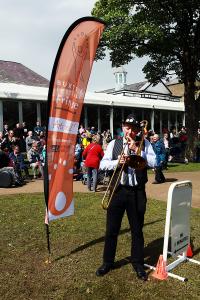
A very enjoyable event features 152 events and contributes nearly £400,000 to the local economy with high satisfaction ratings shown in the audience survey and Fringe website hits going through the roof. Local artist Helen Mint’s photographic design for the Fringe programme cover featuring oranges and orange peel adds zest (!) while Fringe sponsor the University of Derby generously produces new Fringe banners and road signs. Underground Venues celebrates its final year in the basement rooms of The Old Hall Hotel and two special gigs there in the autumn mark this ending of an era. There is another farewell as John Wilson, former chair of the Fringe and associated with the development of the Fringe website, steps back from committee roles at the AGM. Current Fringe chair Keith Savage continues to act as an ambassador for the Fringe attending BAFA’s autumn roadshow in Hull. During the Fringe itself, unofficial Fringe ambassador, Buxton-based trombonist Sam Slide (pictured), is awarded a special Spirit of the Fringe Award for his unfailing good humour and collaborative spirit.
2017
The biggest ever Fringe boasts a final tally of 189 events with ticket sales up by 36% and the estimated total audience figure, including free events, up by 9%. Underground Venues has a successful run in its new home upstairs at The Old Clubhouse whilst The Green Man Gallery consolidates its role as a managed venue for a diverse variety of entertainment. A new venue, the Rotunda, a spectacular geodesic dome which springs up in the Pavilion Gardens, also boasts many high quality productions. The bumper Fringe programme has a new look, receiving praise for its new landscape format as well as its arresting cover by Tom Mason featuring miniature model figures. At the AGM, longstanding member Barbara Wilson stands down as treasurer to be replaced by Stephen Walker.
2018
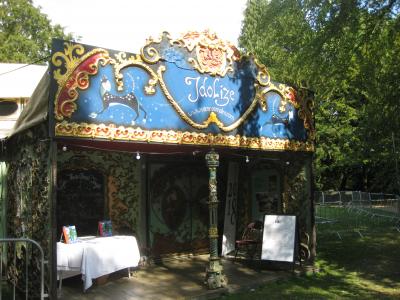
During a long hot summer, another bumper Fringe finds 183 events signing up and ticket sales looking good across the board but especially at the managed venues. Underground Venues report a ticket sales increase of 16% and the Rotunda and The Green Man are once again significant players, the latter also hosting art exhibitions that draws an estimated 700 people. Buxton International Festival’s new Spiegeltent (pictured right) makes a splash in the Pavilion Gardens and hosts Fringe performers The Kaleidoscope Choir. Always keen to improve, the Fringe hosts a Fringe Forum at the Rotunda for the first time as well as including a Q&A session at its AGM in November. 2018 also sees an initiative designed to improve participation at outlying venues in the town. An open-to-all art competition produces an excellent programme cover by New Mills artist Joanna Allen. For the first time, Fringe postcards are made using this design as well as artwork from talented runners up. A similar art competition for 2019 is announced in the autumn. By the end of 2018 plans are already afoot for 2019’s specially extended Fringe40 with entrants offered a special £40 discounted entry fee if they enter the Fringe before the end of February 2019. Derbyshire Village Carols are sung at a Fringe Christmas party at The Green Man Gallery, following a tradition begun in 2015.
2019
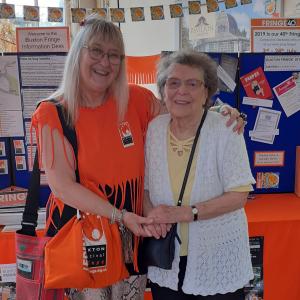
Fringe40 is the biggest ever Fringe with 220 events and ticket sales increasing by an estimated 43%. It is also the longest with an extra three days at the end to mark the Fringe’s 40th year and extend the festival into the school holidays. Nearly £350,000 is contributed to the local economy by the Fringe over a busy summer that sees a total audience figure of more than 18,000. The three managed venues - Underground, the Rotunda and The Green Man - enjoy particularly successful years. Special Fringe40 initiatives include a lively exhibition at The Green Man Gallery looking over the Fringe’s history and a bigger than ever carnival float shared with Buxton International Festival as it celebrates its 40th anniversary. A joint outreach project in schools involves Babbling Vagabonds producing spectacular puppets and sculptures which also form part of our carnival presence. The “Carnival of the Animals” float wins first prize in its category. Fringe40 also sees partnerships with local brass bands, workshops in care homes and the running of two sessions promoting awareness on accessibility and dementia. The printed programme features a beautiful art nouveau cover by competition winner Catherine Webb. Plans for 2020 begin to take shape in the autumn including another cover competition and several green initiatives. The AGM sees significant changes in personnel as Keith Savage steps down as chair to be replaced by former treasurer Stephen Walker. Gary Bellas is appointed treasurer with Gaye Chorlton as Secretary and Maria Carnegie continuing as Vice-chair.
2020
This turns out to be an extraordinary year with much of the Fringe’s planning taking place during a national lockdown brought in by the government following the Covid-19 pandemic. Having already received a pioneering online-only entry (Alice Goes Elsewhere by Buxton Drama League) even before Covid, the Fringe decides to go ahead with a festival based around online events plus other initiatives that do not contravene the government’s rules on social distancing. The entry fee is waived and decisions are made to have no printed programme and no Fringe Information Desk. 101 events go ahead, mostly online but including some physical events such as art trails and an open air promenade comedy performance from Nathan Cassidy. The Fringe reaches out to the community with ideas including Phone@5 offering bespoke performances down the telephone. Audience and entrants’ surveys show huge support for the decision to go ahead and the Fringe website receives nearly 6,000 unique visitors in July with some online shows reporting hits in the 1000s. Performers reported healthy audience figures for their online events with The Shakespeare Jukebox raising over £500 for The Samaritans during the Fringe. In November the AGM takes place online for the first time with new appointments for Treasurer and Vice-Chair, Sandra Jowett and Viv Marriott respectively.
2021
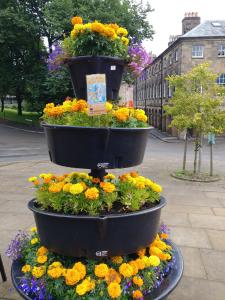
Though the effects of the pandemic linger and some social distancing restrictions are still in place during July, the Fringe enjoys a more normal event with 111 entries; music, comedy and theatre are particularly well represented. Reflecting the changeable nature of events, a general guide is printed instead of the usual listings programme with full information on the website and Fringe app. Two managed venues, Underground and The Green Man Gallery, make a welcome return. Most events are live but 11 are online, some of these being “hybrid”, ie having an online component. The town’s carnival is sadly cancelled and neither Fringe Sunday nor Fringe@5 are able to go ahead. However a lively Fringe busking initiative means that there is Fringe entertainment outside the Pavilion Gardens on most days during the Fringe. The Fringe Information Desk relocates around the corner from its old position next to the Opera House to the conservatory of the Pavilion Gardens where it is warmly received by entrants and audiences. Hot weather in July proves ideal for events such as Art on the Railings, a Broad Walk celebration of artists organised by Buxton Art Trail, and for the Fringe’s re-imagined Fringe Awards ceremony which takes place outside at the Serpentine Community Garden. The Fringe is delighted to have been able to go ahead with live performances and calculates that it has contributed nearly £200,000 to the local economy through audience and performer spending. With everyone in need of cheering up, the Fringe also reaches out to the community to create Fringe “hotspots” of orange flower displays throughout the town including outside care homes. In November the AGM says goodbye to Gaye Chorlton as Secretary (though not as Fringe Desk manager) and welcomes Carole Garner into the role. Stephen, Viv and Sandra are re-elected as Chair, Vice-Chair and Treasurer respectively. In December the Fringe is very sad to learn of the death of former Chair Keith Savage, who made a remarkable contribution both to the Fringe and the town as a whole.
2022
After a very sad start to the year in which the Fringe learns of the death of much-loved Vice-Chair Viv Marriott, the Fringe prepares for its 2022 event and is pleased to celebrate a return to pre-pandemic strength with 171 entries, music, comedy and theatre being once again the biggest categories. Just one event is purely online but events such as The Shakespeare Jukebox have an online component. The printed programme is back as are popular Fringe traditions such as Fringe Sunday and the Fringe/BIF carnival float which won a Well Dressing Trophy for its “Still Smiling” themed decorations! There are no social distancing restrictions during the festival but Covid makes its presence felt particularly among Fringe volunteers who have to really rally round to plug gaps and make sure every show is reviewed. The Fringe Information Desk is once again in the Pavilion Gardens conservatory - a successful location except that a dangerous mini heatwave necessitates its brief closure. The Awards ceremony is again held at the Serpentine, its polytunnel proving useful in a downpour! The Fringe continues to reach out into the community with the expansion of the floral hotspots plus a series of excellent new Fringe podcasts. A collaboration with Chapel Camera Club brings fresh photography of the festival plus an exciting programme cover for 2023. Fringe figures reveal an 110% increase in ticket sales from 2021 and a contribution to the local economy of well over £200,000. At the AGM in November, Friends co-ordinator Jeanette Hamilton is appointed as Vice Chair with Stephen, Sandra and Carole re-elected as Chair, Treasurer and Secretary respectively. December sees a Christmas Party in the historic Pump Room featuring the singing of Derbyshire Village Carols.
2023
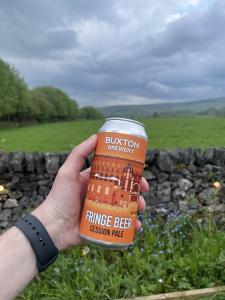
A bumper Fringe features 192 entries with music, comedy and theatre the biggest categories. Despite a fair amount of unseasonal rain, audiences prove resilient and Fringe Sunday, the Fringe/BIF Carnival Float and a new event, Fringe on Friday, offering extracts from shows on the bandstand, go ahead successfully. Figures reveal a 31% increase in total ticket sales with the Fringe contributing around £276,042 to the local economy thanks to greater audience spend on accommodation and food and drink amongst other factors. Average audience attendance per show goes up to 30, a level not seen for a decade. On a sadder note, Buxton Museum and Art Gallery closes shortly before the Fringe following the discovery of dry rot. This means the loss of visual arts exhibitions there including the prestigious Derbyshire Open. The Museum Talks go ahead at the Methodist Church however. 2024 sees Fringe collaborations in the community including a partnership with High Peak Community Arts and Buxton Project eARTH resulting in a colourful hand-painted banner and the continuation of the floral hot spots project around the town. Promotions with High Peak and Hope Valley Community Rail Partnership as well as D&G and High Peak Buses help encourage sustainable travel to the festival. This year also sees the welcome return of Fringe Beer with Buxton Brewery producing a delicious brew whereby 20p from every pint is donated to the Fringe! At the AGM, Stephen, Jeanette, Sandra and Carole are re-elected as Chair, Vice Chair, Treasurer and Secretary respectively. A fond tribute is paid to former Chair John Wilson who stands down from the committee.